LCP Style Guide - Home
Legendary Creature EDH Style Guide
In 2017 the Legendary Creature Podcast was launched with a basic brand, covering only the basics sufficient enough to start a podcast. This included a loose notion of a logo, colors, and fonts to accompany some art made by a friend on the fly.
As the podcast moved from a sandbox for creativity to a fledgling business, I undertook the fresh task of designing a logo, building a color scheme, finding fitting fonts, and pinning down our voice. This effort put the brand in a new direction that we have continued to refine and hone through time. Through experience, we have organically been able fine-tune a visual brand and give our tone a definition.
Below you’ll find elements of the brand guide that has been crafted through years of experience. We’ve learned that we are at our best when we are ourselves and take on a tone of invitation. Those who interact with our brand find an old-school, nerdy familiar vibe that evokes afternoons and weekends spent in a friend’s basement plunging into mediums of escape. Legendary Creature EDH is not just a non-descript fantasy adjacent media brand, but a brand where a fantasy hobby has collided with friends, home, and other hobbies. It embodies the fully rich hobby life of a nostalgic millennial, sitting down with their Magic cards and friends. Analog games, scratchy VHS tapes playing over the TV, electronic beats in the background, and vaguely crass inside jokes eliciting laughter.
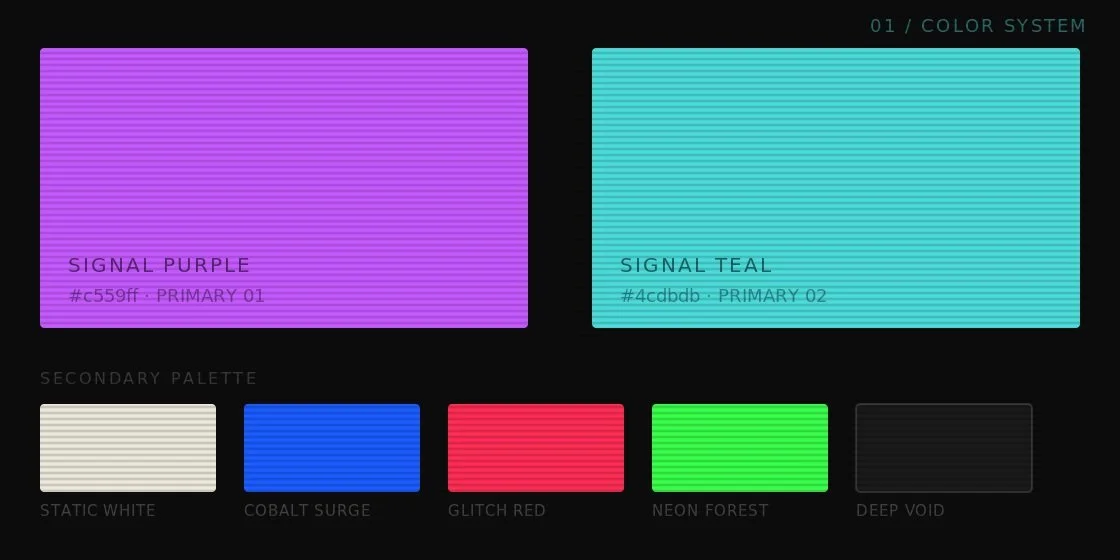
Color System
The LCP color palette lives on Void Black and breathes in two directions — Signal Purple (#c559ff) and Signal Teal (#4cdbdb). These aren't decorative choices; they're the primary identity of the show in visual form, with everything else organized around them. Five secondary colors — Static White, Cobalt Surge, Glitch Red, Neon Forest, and Deep Void — serve as accent and episode-level toning, applied one or two at a time depending on the moment and never all five at once outside of the five-dot Easter egg. Print guidance covers both the forgiveness of DTG and the precision required for screen-print spot colors — Signal Purple is the more sensitive of the two and needs Pantone specification to survive CMYK without going muddy.
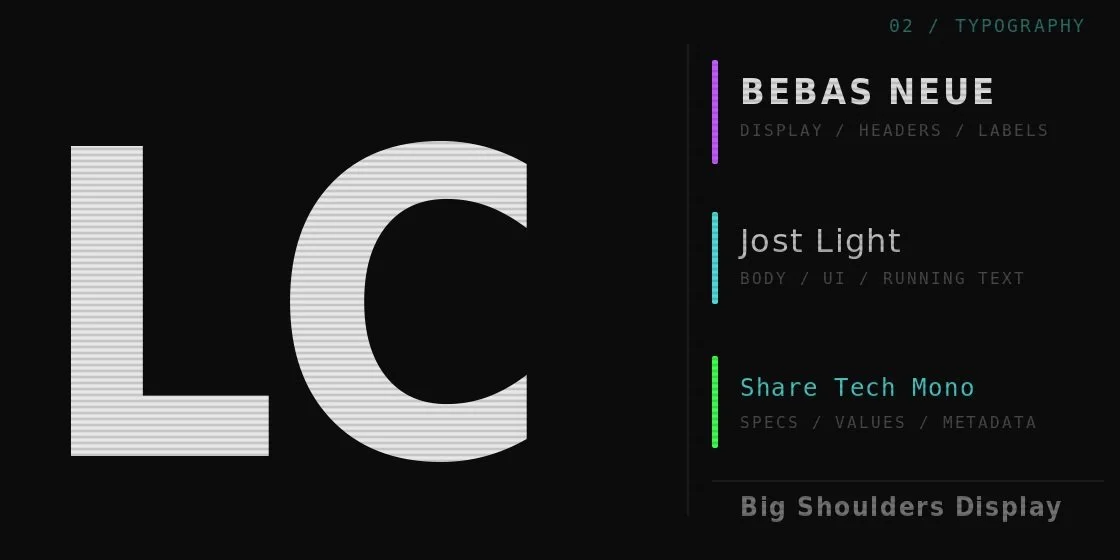
Typography
Four fonts do the work; each has a defined role and stays in its lane. Bebas Neue leads the display tier — show titles, labels, anything that earns presence at scale. Jost carries body copy in light and regular weights, keeping text legible and brand-legible without competing with the headers above it. Share Tech Mono handles specs, values, and metadata — the numerical and technical language of the show. Big Shoulders Display occupies a mid-register accent space for episode-level headlines where Bebas is too heavy and Jost too neutral. VCR OSD Mono is a special guest, reserved for deliberate retro moments — pairing it with heavy glitch effects is redundant, and the brand doesn't need two layers of CRT making the same argument.
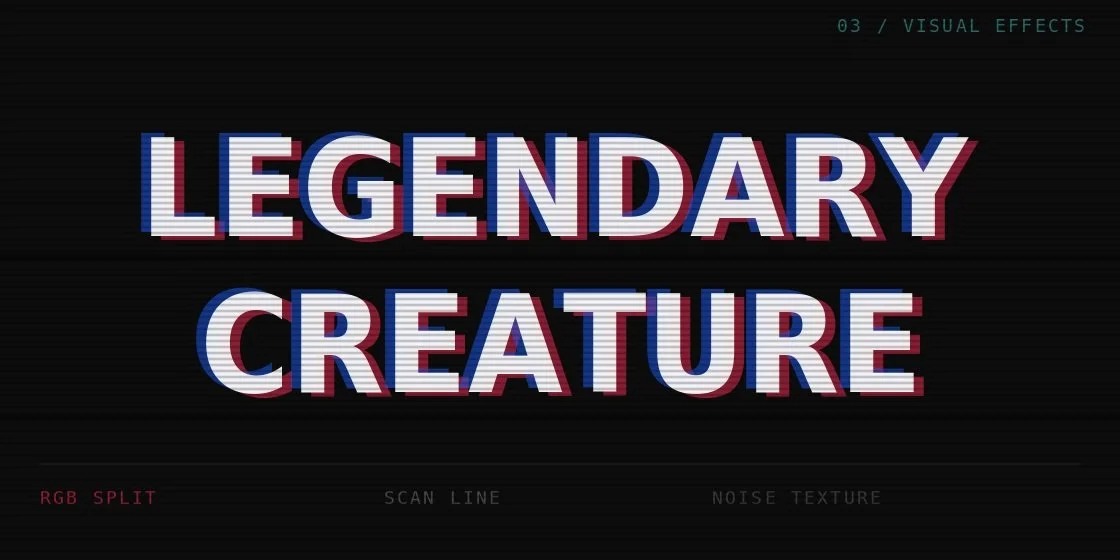
Visual Effects
The scan-line overlay, RGB chromatic aberration split, and noise texture are the three tools that give LCP assets their specific character — not just dark, but CRT-dark, the kind of dark that has history in it. Each effect is defined here: how it's constructed, what opacity range keeps it from reading as a mistake, and when to deploy it versus leave it quiet. A thumbnail for a control-heavy episode builds differently than one for a chaos reanimator build, and the effects system is how you make that distinction felt rather than just stated. The guide also covers what not to do — over-layering, mismatched effect contexts, and the particular crime of scan-lines running at the same time as VCR OSD Mono.
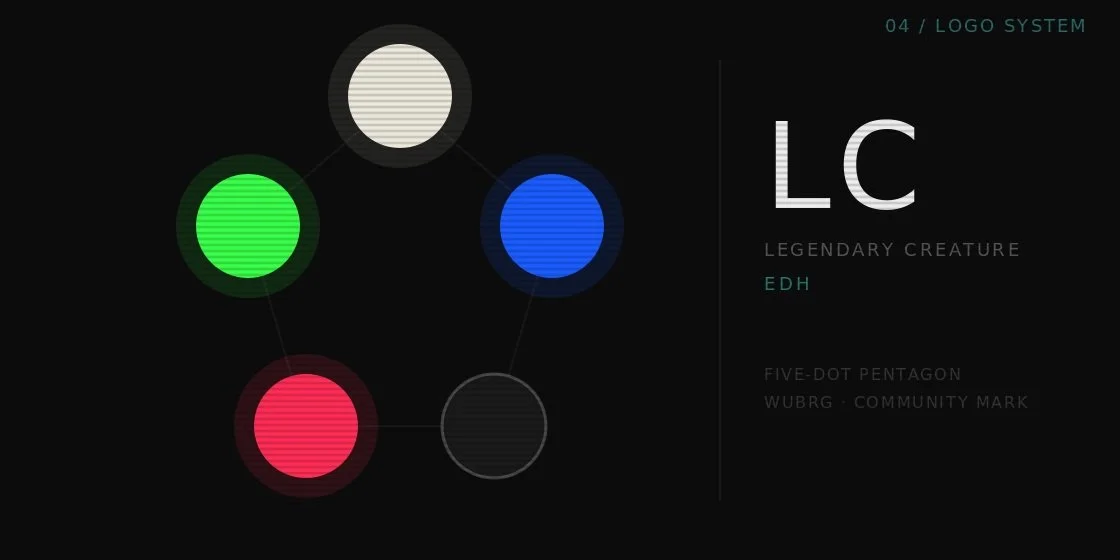
Logo System
The LCP mark is a five-dot pentagon — a direct nod to the five-color mana system at the heart of Magic: the Gathering, each dot mapping to one of the WUBRG color identities and translated into LCP's own palette. The five-dot mark operates as a community signal, not a primary identifier — recognizable to players, abstract to outsiders, and best deployed on merch and community-facing contexts where the insider reference is the whole point. Clear space, color variants, minimum sizes, and lockup options are all defined here, giving the system enough flexibility to work across contexts from a thumbnail corner bug to a full-bleed title card, without leaving room to improvise outside the defined variants.
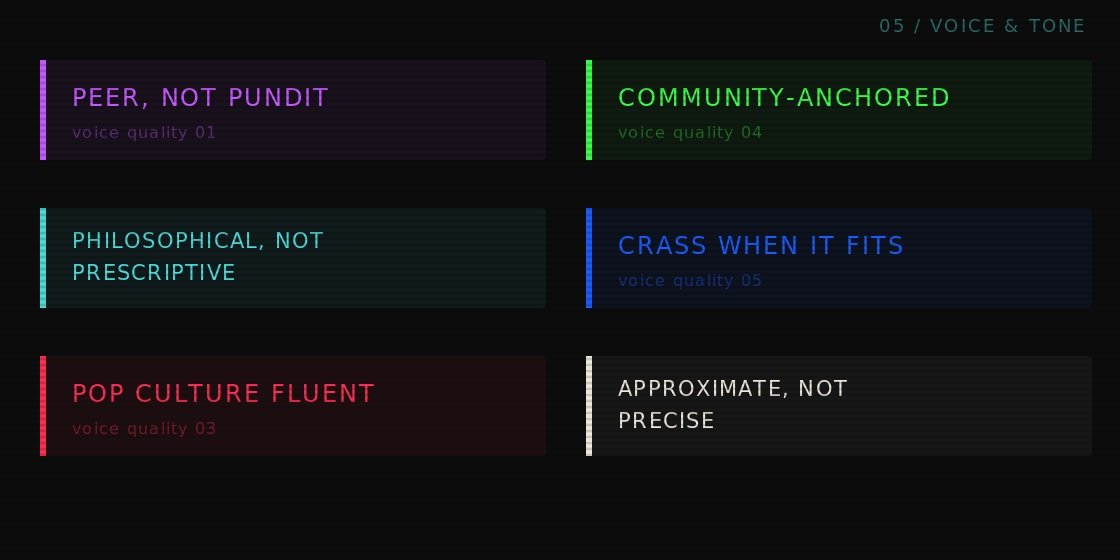
Voice & Tone
Six core qualities define what LCP sounds like in writing: Peer, Not Pundit; Philosophical, Not Prescriptive; Pop Culture Fluent; Community-Anchored; Crass When It Fits; and Approximate, Not Precise. These aren't personality traits to perform — they're descriptions of what the show already does, extracted and written down so anyone writing for it can find the register without guessing. The vocabulary section grounds the tone in the specific language that comes out of the table: insider terms, format slang, and the particular way Kyle, Andy, and Tiffany talk about the format. Voice in the Wild examples show each quality working in context, and the Sounds Like / Doesn't Sound Like section is probably the most useful two-column comparison you'll read about how not to write about Commander.